Wildly Efficient: Towards minimal sampling in urban visual perception studies in the wild
Abstract
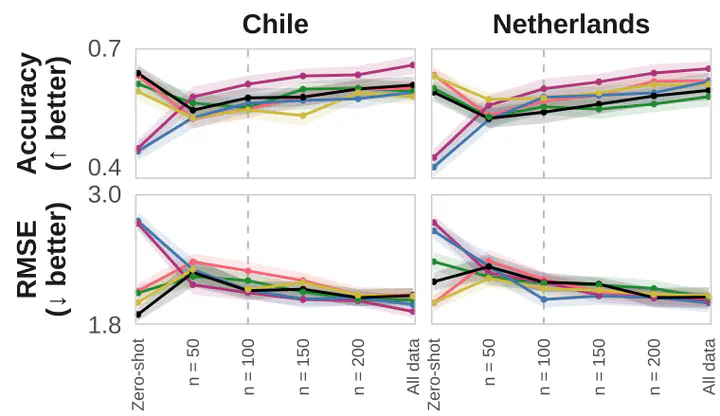
Urban visual perception remains a commonly used tool to quantify the human experience in cities. Studies continue to collect location and demographic-specific data as global models and synthetic data fails to capture residents’ nuances. In this work, we explore a first analysis on the minimum data collection for demographic-specific perception prediction models. We found that more data does not always equal better models. While some perceptual dimensions consistently improve with more labeled data, some perceptual dimensions fluctuate. We call for researchers to carefully handle these dimensions, to provide guiding prompts in the perception rating or to have a specific strategy in image sampling. This preliminary results contributes to urban science guidelines and recommendations for more empirical and human-centric studies.

Matias Quintana
Research Fellow

Xiucheng Liang
PhD Researcher