Abstract
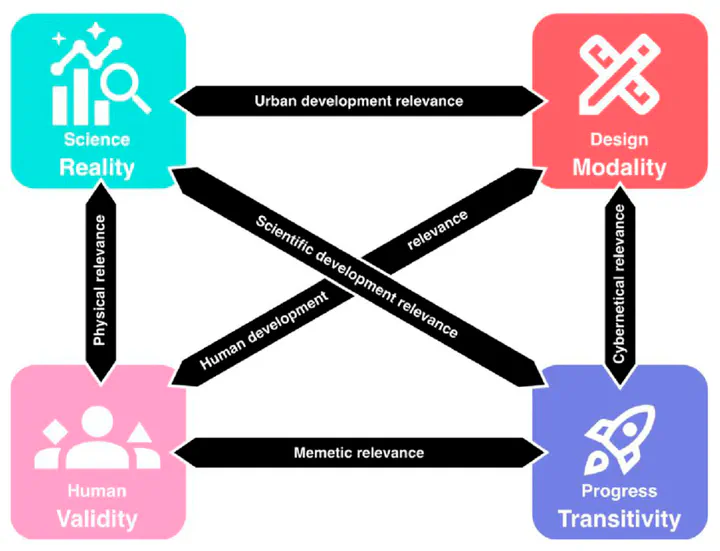
Architecture, engineering, and construction have increasingly integrated automated tools and digital approaches for urban analysis and design. Many of these approaches are tailored towards either urban Design or urban Science, despite both being central to our understanding of cities. The separation between these two core aspects of urban development introduces multidisciplinary challenges when addressing the consequences of urban phenomena. We propose the paradigm of Semantic Urban Elements (SUEs) to combine Science-based and Design-based knowledge about potential solutions to complex urban issues, integrating advances in scientific and design thinking about such solutions using formal, open knowledge representation frameworks. We first present current problems by briefly discussing the relevant state of the art in urban Science and urban Design. Second, we derive the key characteristics that a combined urban Design+Science approach would require. We then posit a definition of SUEs and provide an illustrative example, followed by a contextualization of our proposition and evaluate existing work through the lens of our proposed paradigm. The novel SUEs method is an enabling infrastructure that supports iterative, evidence-informed design exploration and transparent evaluation. In this way, SUEs responds to the digital revolution in urban quantification by integrating Design and Science and provides the necessary framing lens to tackle different challenges in cities in a way that benefit cities, humans, and their future, considering their mutual relationships.

Matias Quintana
Research Fellow
Chenyi Cai
Research Fellow
Youlong Gu
Research Engineer